
In 1933, Hitler came to power in Germany, and three years later the Summer Olympics were held in Berlin, where Goebbels used them as a propaganda tool for the Nazi regime.
The Olympic Stadium is the main architectural witness to this event, and its distinctive architecture makes it an interesting site to visit, whether for a sporting event or a photo outing.


But before talking about the stadium itself, it’s worth recalling the context of the 1936 Games, and even going back a little further in time.
In 1912, the International Olympic Committee chose Berlin as the site for the 1916 Games, but the outbreak of the First World War led to the cancellation of the event.
In 1931, the Olympic Committee once again chose Berlin for the 1936 Games. At the time, Germany was under the Weimar republic regime, only ten years after the end of the First World War and Germany’s defeat.
The decision to hold the Games in Berlin was not called into question when the Nazi regime came to power. Calls for a boycott were made in many countries, but without much effect. In the end, 49 nations took part, compared with 37 at the 1932 Games.
The German government was able to give guarantees to the Olympic Committee regarding the organisation of the Games and the participation of Jewish athletes. These guarantees were to have no effect, as the anti-Semitic rules and persecutions were at best suspended for the two weeks of the games.
This event was to become a propaganda tool, with television coverage of the most important events for the first time and the publication of the film “Olympia” in 1938.
The current stadium was built between 1934 and 1936 on the site that should have been used for the 1916 games. It is one of the few Nazi-style buildings to have managed to retain its original character. I also recommend my post on Tempelhof, which is another example of that type of archtecture and also well worth a visit: Berlin Tempelhof – an airport in the city center
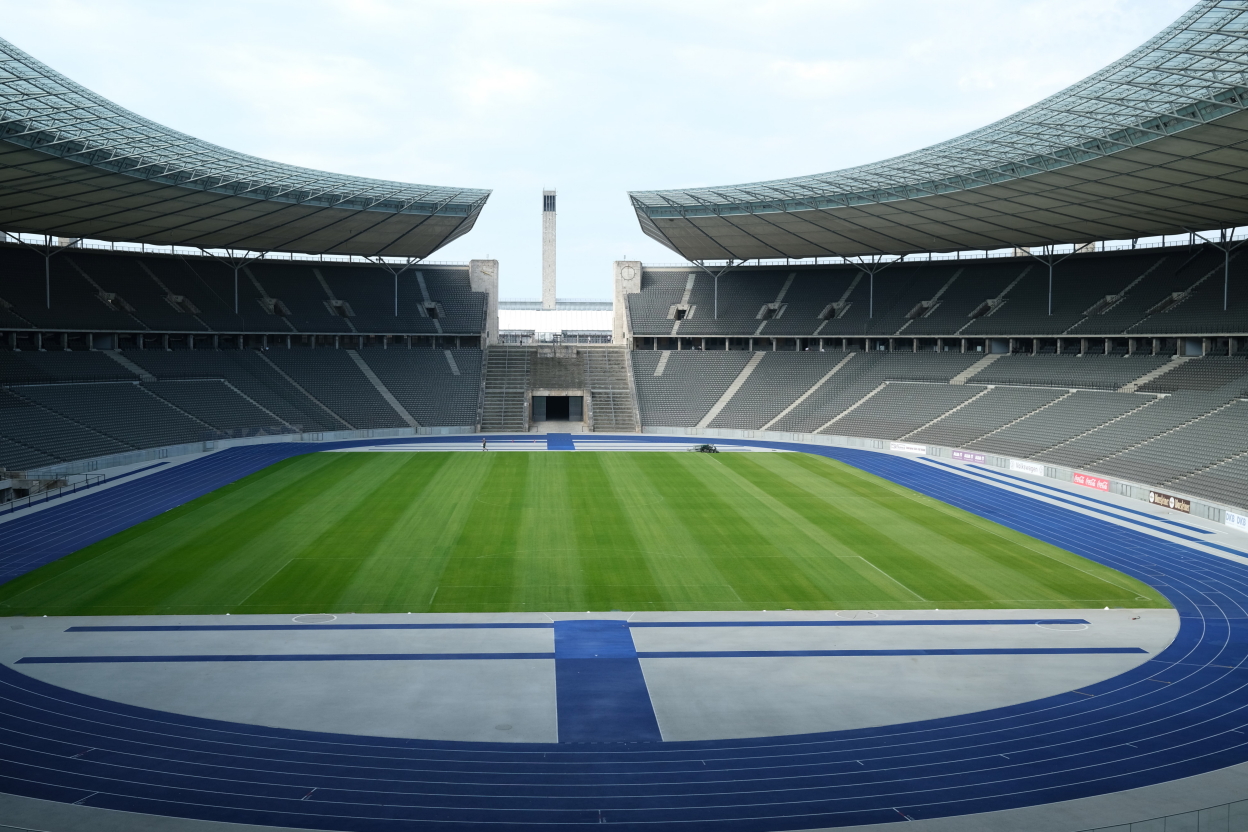
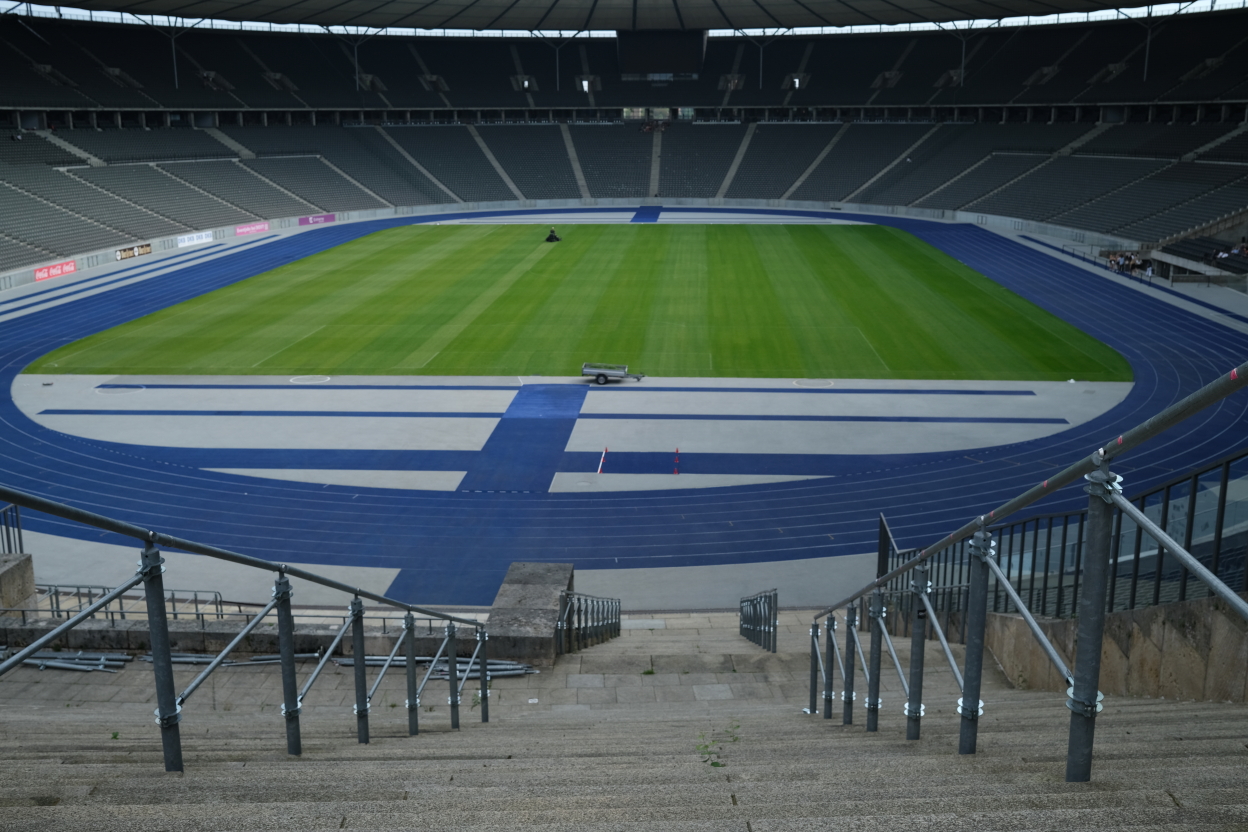
In 1936, the stadium was designed to accommodate up to 110,000 spectators. Today, around 75,000 people can attend the sporting events held there, including football matches and the athletics meeting with its characteristic blue track.


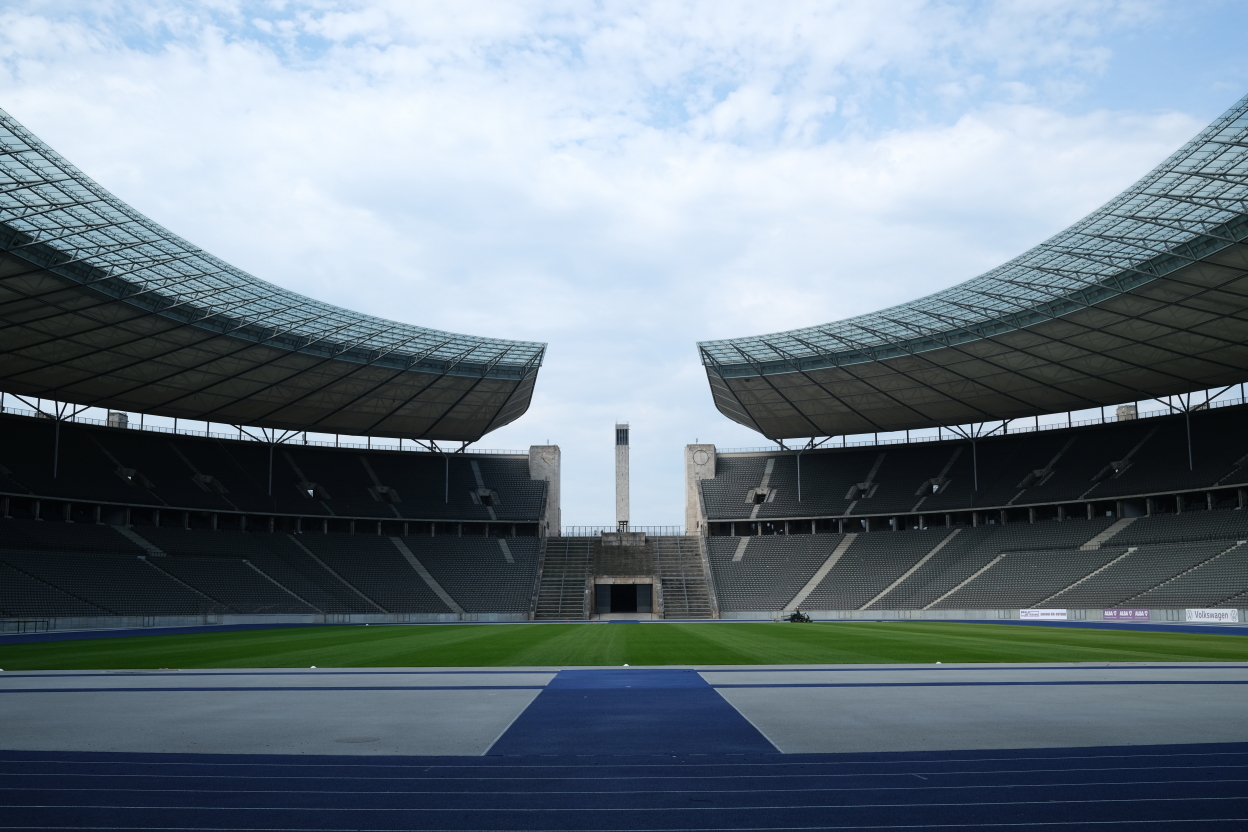
It underwent extensive renovation in 1974 and 2000, with the addition of a partial roof over the stands, but its original structure has remained.
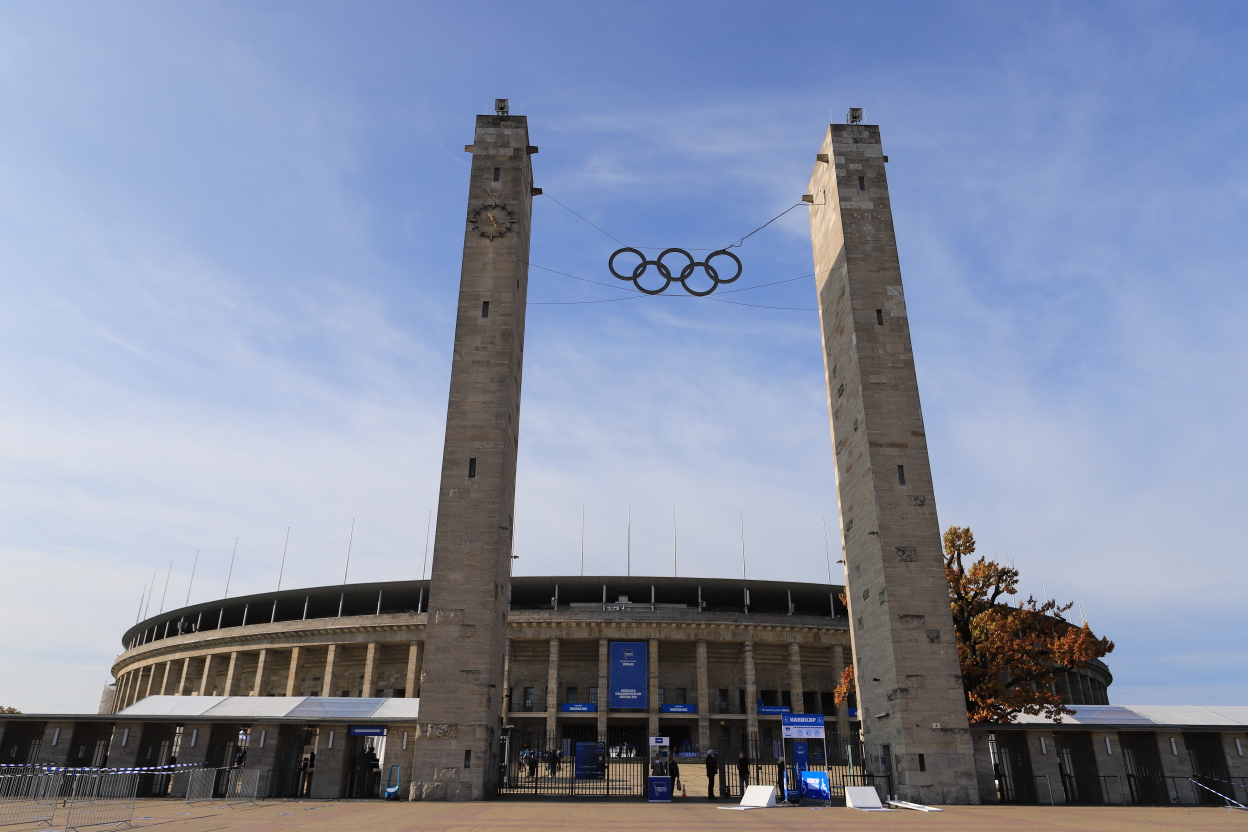
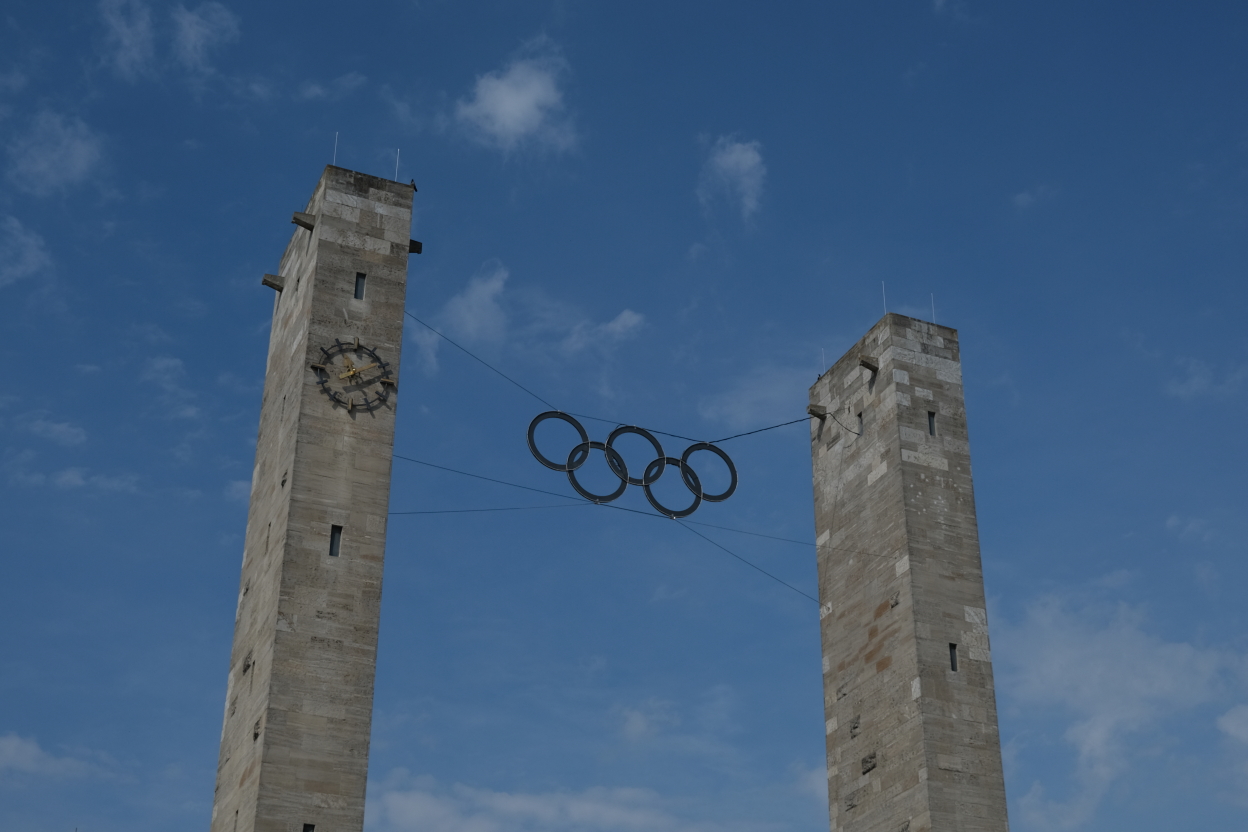
The stadium is built on top of a small hill, and even though it is semi-underground, it gives the impression of dominating the surrounding area, especially as few buildings have been constructed around it. Two large columns mark the entrance to the stadium, and are also found opposite the main entrance.

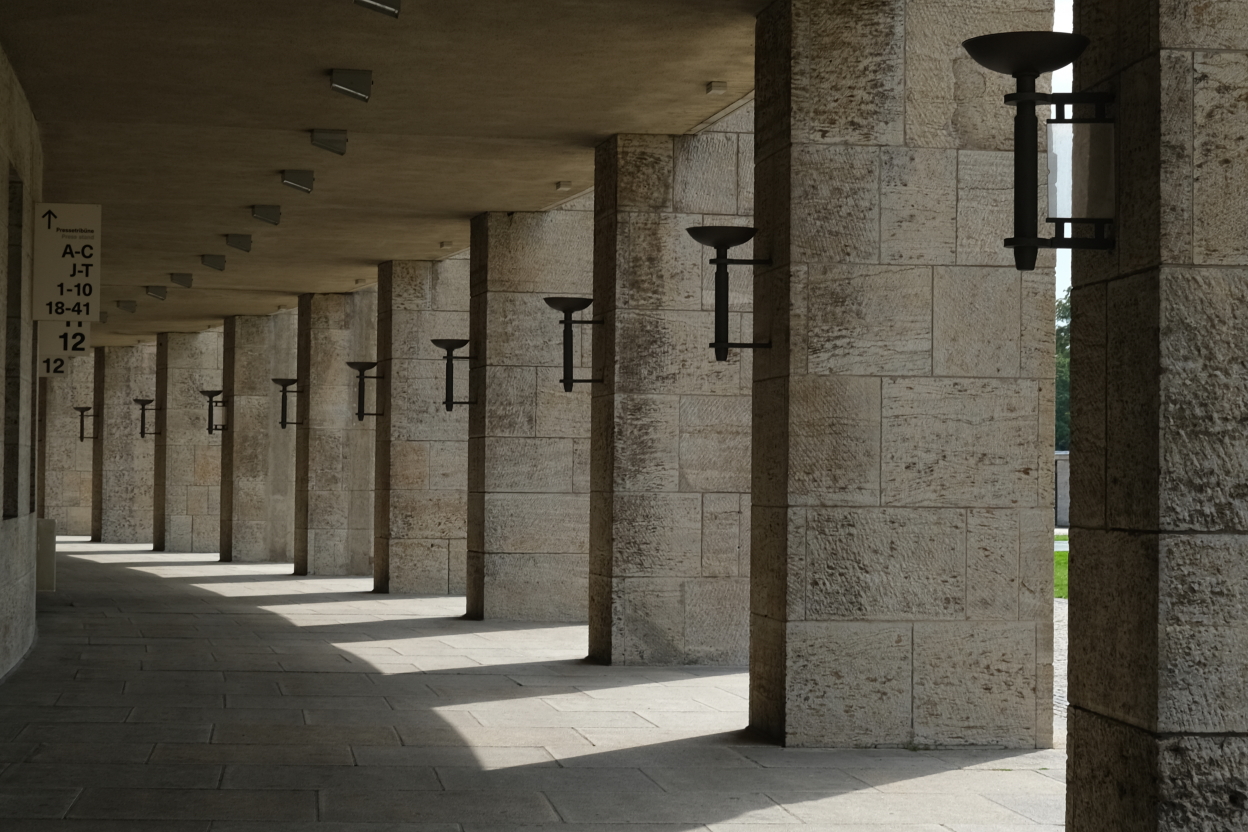
An outdoor gallery runs the full length of the stadium, punctuated by massive columns and equally massive statues. Everything has been done to make you feel very small in this temple of sport …




Just as impressive is the view you get when you enter the stadium itself, particularly from the top of the stands.

Where to find it? https://maps.app.goo.gl/75UfpSFRHPKbmY9S8
NB: That year, the Olympic Winter Games were held in Garmisch-Partenkirschen, in Bavaria, also in Germany. This was the last year that the Winter and Summer Games were held in the same country.
 Où que ce soit ... Wherever it is